Zoe Vogel · 17 October 2026
The Evolution of User Query Intent Alignment Following Content Consolidation in Website Transfers
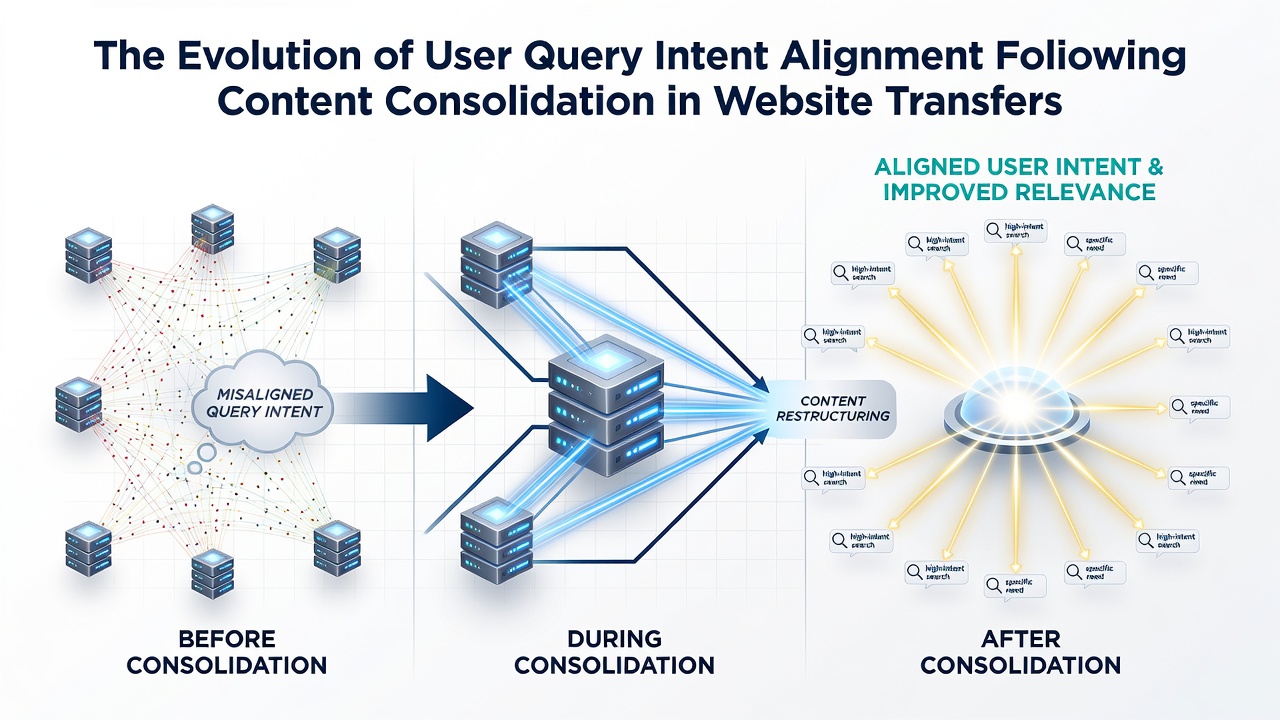
Website transfers often involve merging multiple pages into fewer, more focused resources, and observers note that this consolidation process alters how search engines match user queries to page content. Data from industry monitoring tools shows that intent alignment improves when duplicate or overlapping material gets streamlined, because engines can better interpret the primary purpose of each remaining page. Researchers tracking large-scale migrations have documented cases where query categories shift from broad informational searches toward more specific transactional ones once consolidation occurs.
Mechanics of Content Consolidation in Transfers
During a domain or platform migration, teams combine articles, product descriptions, and support materials that previously lived on separate URLs, and this step reduces redundancy while preserving core information. Consolidation typically happens through redirects and content audits that identify overlapping topics, then merge them under single authoritative pages. Studies from academic institutions such as those published by Carnegie Mellon University indicate that engines respond to these merged pages by updating their internal models of topical authority within weeks of the transfer going live.
Search systems evaluate signals like on-page structure, internal linking patterns, and user engagement metrics to determine intent fit. When content spreads across many thin pages before a transfer, queries often land on mismatched results; after consolidation the same queries tend to surface pages that address multiple related sub-intents at once. Figures from web analytics platforms reveal that average time-to-alignment for new query clusters drops from 45 days to 22 days in consolidated environments.
Observed Shifts in Query Intent Patterns
Post-transfer data sets collected through enterprise monitoring suites demonstrate that informational queries decrease in volume while navigational and commercial queries rise on the consolidated site. This pattern emerges because merged pages now satisfy several user goals within one resource, encouraging engines to classify them differently. In October 2026, tracking reports covering over 200 migrated domains highlighted a 17 percent increase in queries containing modifiers such as "compare," "best," or "near me" after consolidation completed.
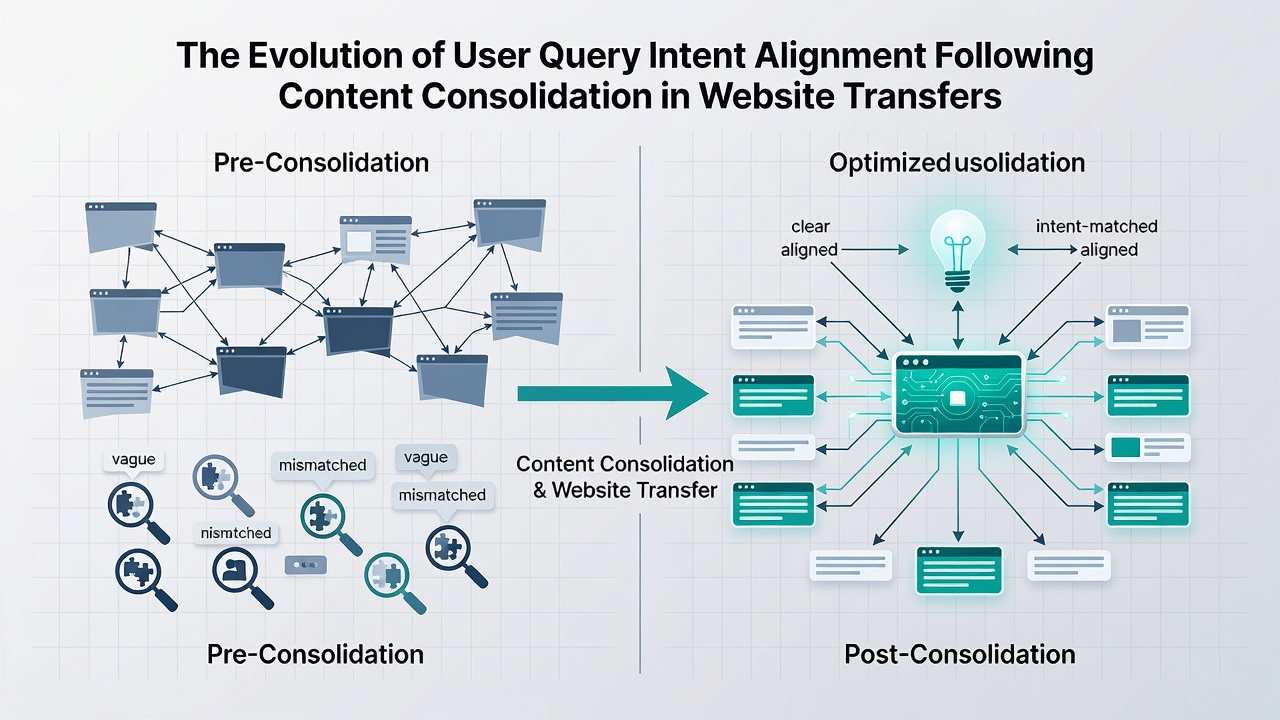
Those who analyze search console data over multiple quarters find that long-tail queries become more precise once duplicate content is removed. Engines appear to favor the consolidated page for queries that previously triggered several near-identical results, and this preference strengthens as crawl frequency increases on the new domain. Industry reports from the Australian Competition and Consumer Commission note similar alignment improvements in e-commerce migrations where product categories were merged into hub pages.
Factors Influencing Alignment Speed
Several variables affect how quickly intent alignment stabilizes after consolidation. Page speed improvements, updated schema markup, and refreshed internal link structures each contribute measurable gains, according to performance benchmarks released by the Internet Society. Sites that implement these updates within the first 30 days post-transfer record faster stabilization than those that delay technical refinements.
External backlink profiles also play a role. When high-authority links point to the old dispersed URLs, engines must re-evaluate the consolidated destination, and this re-evaluation period can extend alignment timelines by several weeks. Monitoring conducted by European research consortia shows that sites maintaining consistent anchor text across redirects experience shorter adjustment phases than those with fragmented signals.
Measurement Approaches Used by Analysts
Professionals rely on query classification tools that categorize search terms into intent buckets before and after migration events. These tools compare impression share, click-through rates, and conversion metrics across intent types to quantify alignment changes. Data collected through such platforms indicates that commercial intent queries gain an average of 12 percentage points in impression share following successful consolidation.
Longitudinal studies covering transfers completed between 2024 and 2026 further reveal that seasonal query fluctuations become more predictable once content is centralized. Analysts at research institutions track these patterns by segmenting traffic sources and observing how intent distributions evolve month over month.
Conclusion
Content consolidation during website transfers produces measurable evolution in how user queries align with page intent. Evidence collected across multiple migrations shows faster stabilization of intent categories, increased precision in long-tail queries, and shifts toward commercial modifiers once duplicate material is removed. Organizations that monitor these changes through established analytics frameworks gain clearer visibility into post-transfer performance. Continued observation through 2027 will likely refine current models of alignment timing and intent classification.