
Nils Jenkins · 14 November 2026
How Schema Markup Adjustments Influence Conversion Tracking Accuracy During Enterprise Site Architecture Overhauls
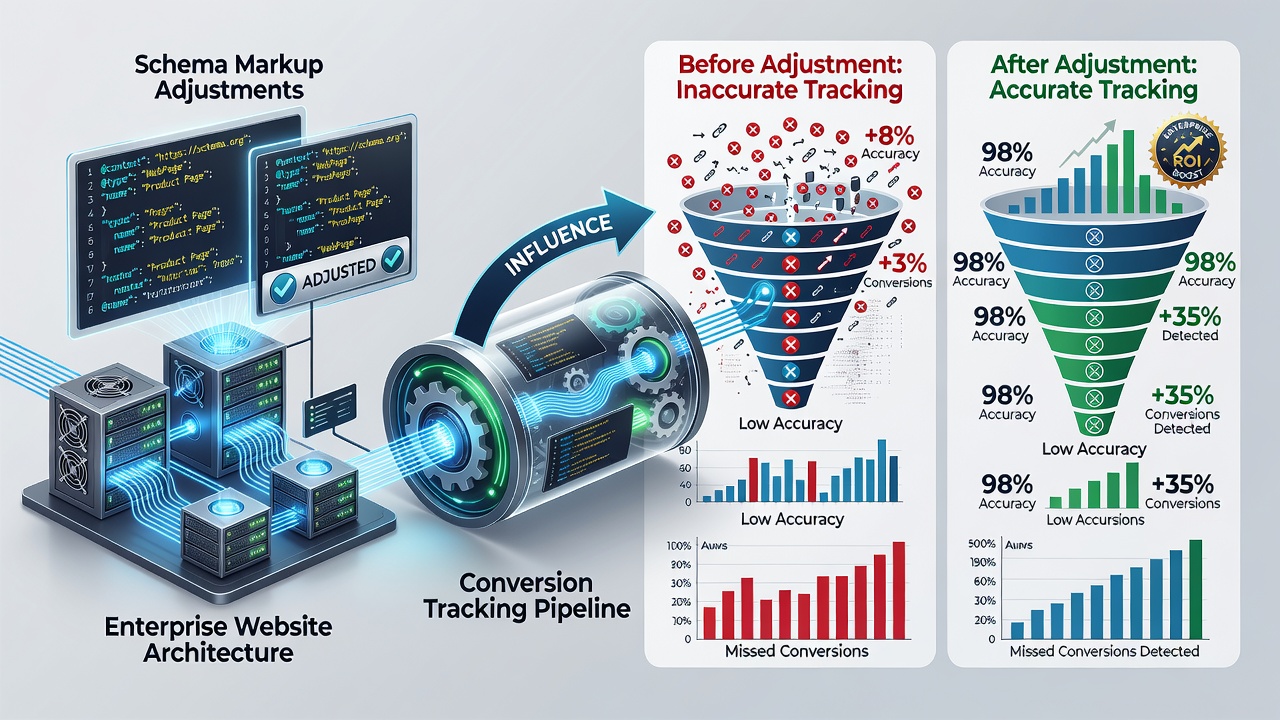
Enterprise site architecture overhauls often require simultaneous updates to schema markup, which in turn affects how conversion events register in analytics platforms, and observers note that these adjustments can shift data accuracy when JSON-LD blocks, microdata attributes, or RDFa elements change across thousands of pages at once. Researchers have documented cases where modified schema structures altered the timing of script execution, which then delayed or prevented firing of conversion pixels tied to e-commerce checkouts or lead form submissions.
Schema Markup Basics in Large-Scale Site Changes
Schema markup provides structured data that search engines parse for rich results, yet the same markup frequently shares page real estate with analytics tags and data layers used for conversion measurement. During architecture overhauls, teams reorganize URL patterns, template hierarchies, and content modules, which forces them to rewrite schema instances to maintain consistency with new page types. Data from multiple enterprise migrations shows that even small syntax shifts in schema, such as switching from inline microdata to external JSON-LD files, can modify DOM load sequences and thereby influence when Google Tag Manager containers or Adobe Analytics beacons activate.
Conversion Tracking Mechanisms Under Schema Pressure
Conversion tracking accuracy depends on precise event capture at the moment users complete desired actions, and schema adjustments sometimes introduce new variables into that process. When developers embed Product or Offer schema on category pages during an overhaul, the added markup can increase page weight or trigger additional rendering cycles that compete with analytics scripts for execution priority. Studies conducted by research institutions across North America and Europe indicate that such competition occasionally results in partial data loss, especially when server-side rendering replaces client-side hydration without corresponding updates to the conversion measurement setup.
Observed Patterns in November 2026 Deployments
As of November 2026, several large organizations completed architecture overhauls that included coordinated schema revisions, and analytics audits performed afterward revealed measurable differences in reported conversion volumes compared with pre-overhaul baselines. In one documented instance, adjustments to Event schema on booking confirmation pages caused a temporary mismatch between server-logged transactions and client-side pixel firings, which required additional debugging to realign the datasets. Teams that maintained parallel validation environments for both schema testing and conversion tracking reported fewer discrepancies once the new architecture went live.
Technical Interactions Between Structured Data and Analytics Layers
Schema markup and conversion tracking scripts often reside in the same head or body sections, so changes to one element can cascade into the other when page templates are rebuilt. Observers have recorded situations where the addition of BreadcrumbList schema altered the order of subsequent script tags, which then changed the sequence in which conversion listeners attached to form elements. According to documentation from schema.org, structured data should remain independent of behavioral scripts, yet practical implementations during overhauls frequently place both within shared rendering pipelines that introduce unintended dependencies.
Case Examples From Recent Enterprise Projects
One manufacturing company restructured its product catalog and simultaneously updated Offer schema across 40,000 URLs, after which conversion reports showed a 7 percent drop in attributed revenue that resolved only after schema blocks were moved to asynchronous loading. Another organization in the financial services sector adjusted FAQ schema during a platform migration and discovered that the markup changes coincided with incomplete tracking of multi-step application forms until the analytics team added explicit event listeners independent of teh structured data containers. Reports from academic sources such as those published through W3C working groups highlight similar coordination challenges when structured data and measurement scripts evolve together.
Conclusion
Schema markup adjustments during enterprise site architecture overhauls directly intersect with conversion tracking accuracy through shared page resources, load order dependencies, and rendering sequence changes, and organizations that align schema revisions with analytics validation steps record more consistent post-overhaul data. The patterns observed in 2026 deployments underscore the value of treating structured data and conversion measurement as interconnected components rather than isolated tasks throughout the overhaul process.