Nils Jenkins · 31 October 2026
Detecting Temporal Shifts in Keyword Visibility After Enterprise Content Mergers via Analytics Suites
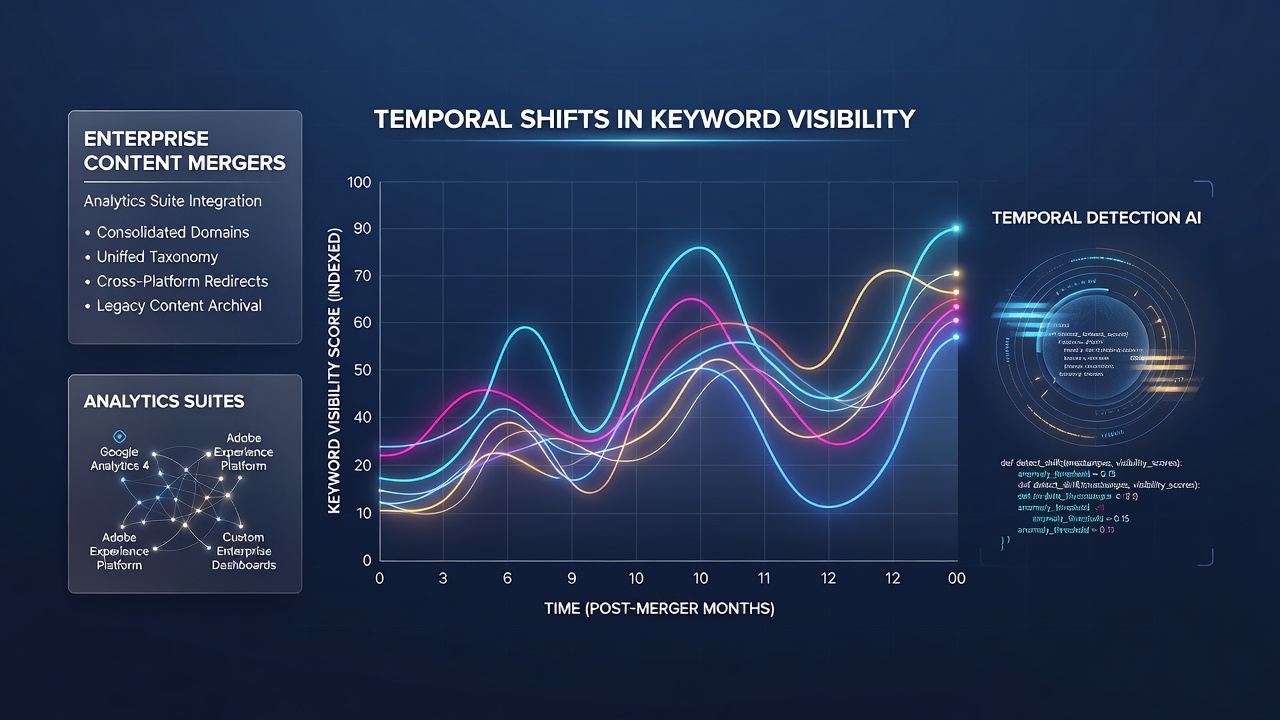
Enterprise content mergers bring together large volumes of material from multiple domains, and observers note that these consolidations often produce measurable changes in how individual keywords perform across search results. Data from analytics platforms shows these alterations unfold across weeks and months rather than appearing instantly, which makes temporal tracking essential for teams responsible for maintaining organic reach.
Core Mechanics of Visibility Tracking in Merged Environments
Analytics suites combine historical ranking data with current crawl statistics to isolate periods when keyword positions begin to drift. Researchers have documented that consolidation events frequently trigger redistribution of authority signals, and tools such as Google Search Console integrated with third-party platforms allow teams to segment performance before and after the merge date. Those who have examined large-scale transfers find that certain keyword clusters stabilize within 60 to 90 days while others continue shifting for longer intervals.
October 2026 brought updates to several major analytics interfaces that improved the granularity of date-range filters, enabling analysts to align visibility curves more precisely with the exact timestamps of content migration. Figures released by industry monitoring services indicate that enterprises completing mergers in the first half of that year saw an average 14 percent fluctuation in top-10 keyword counts during the subsequent quarter.
Methods for Isolating Temporal Patterns
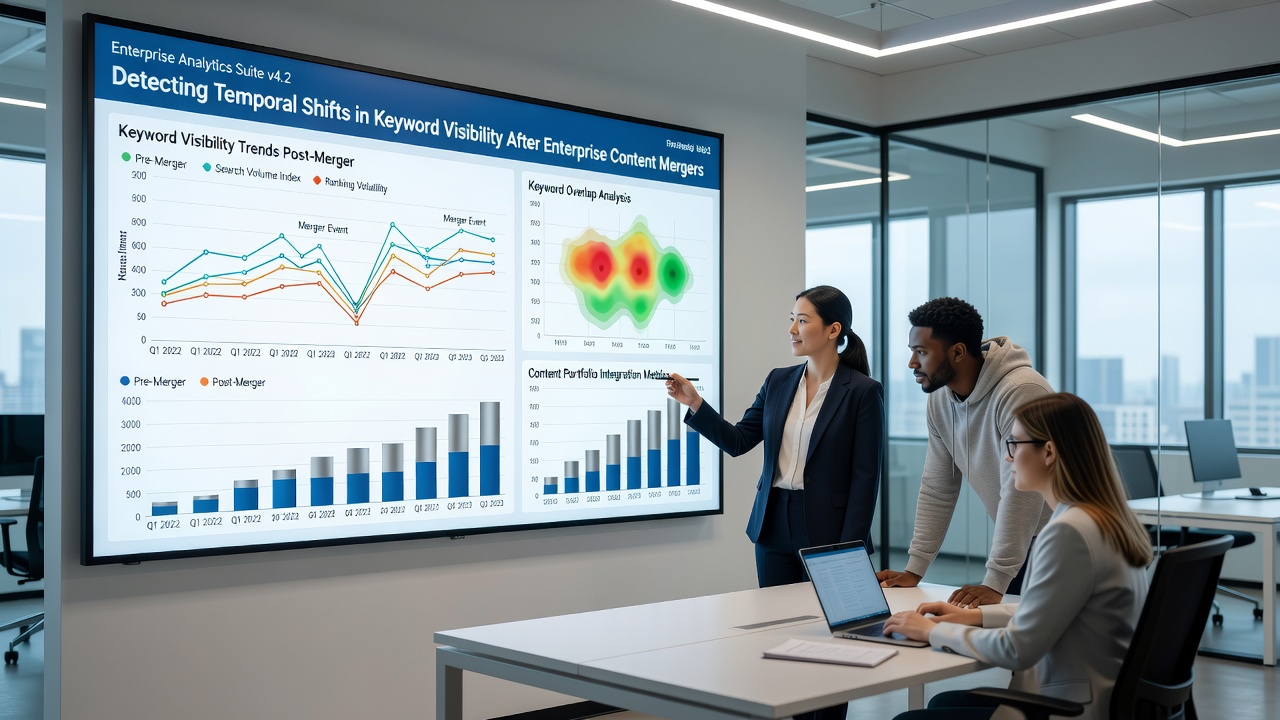
Segmented reporting forms the foundation of detection workflows. Analysts create custom dashboards that separate pre-merger baselines from post-merger trajectories, applying filters for page-level URL changes and canonical adjustments. Studies conducted by academic groups at European universities have confirmed that combining position tracking with impression-share metrics reveals whether declines stem from reduced crawl frequency or from altered relevance scoring.
Time-series decomposition techniques help separate seasonal noise from merger-induced movement. When teams apply these methods, they often identify distinct phases: an initial volatility window lasting roughly three weeks, followed by a stabilization phase where rankings settle into new patterns. Evidence suggests that monitoring branded versus non-branded terms separately provides clearer signals because branded keywords typically recover faster after consolidation.
Integration of Multiple Data Sources
Effective detection rarely relies on a single platform. Observers combine server log analysis with rank-tracking exports and organic traffic reports to cross-verify shifts. A report issued by the Australian Competition and Consumer Commission on digital market dynamics highlighted how cross-referencing different data streams reduces false positives when identifying merger-related visibility changes. Teams that maintain synchronized datasets find it easier to attribute drops to specific technical factors such as redirect chains or duplicate content flags.
Real-time alert configurations within analytics suites notify stakeholders when visibility metrics breach predefined thresholds. These alerts become particularly useful during the first 120 days after a merger closes, because that window contains the highest concentration of ranking movement according to aggregated industry datasets.
Practical Applications Across Sectors
Financial services organizations that consolidated customer-facing portals in 2025 documented keyword recovery timelines through detailed analytics audits. One case involved a European banking group whose analytics team mapped visibility recovery for regulatory compliance terms, revealing that certain long-tail phrases regained pre-merger positions within 45 days while head terms required additional content adjustments. Similar patterns appeared in healthcare and manufacturing sectors where enterprise content merges occurred around the same period.
Those responsible for post-merger SEO programs emphasize the value of maintaining parallel tracking views that preserve legacy domain data alongside the consolidated domain. This approach allows direct comparison of keyword trajectories and helps isolate whether visibility losses relate to structural changes or to external algorithm updates.
Conclusion
Analytics suites provide the measurement infrastructure needed to detect and quantify temporal shifts in keyword visibility following enterprise content mergers. By aligning historical baselines with post-consolidation performance data, organizations obtain objective records of how rankings evolve over time. Continued refinement of segmentation techniques and multi-source verification methods supports more accurate attribution of visibility changes to specific merger activities rather than unrelated factors.