Nils Jenkins · 5 September 2026
Decoding the Interplay Between Server Response Patterns and Ranking Stability for Relocated Websites
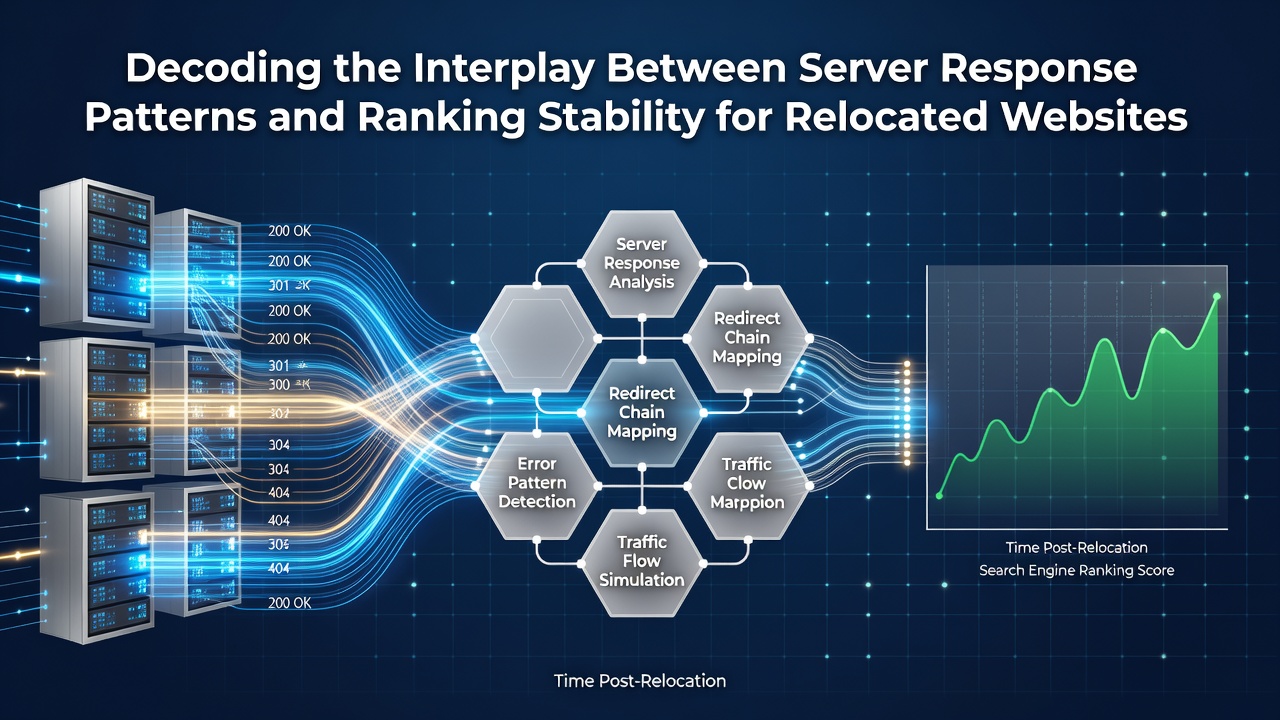
Server response patterns during website relocation shape how search engines process and evaluate new domain structures, with response times, status codes, and error frequencies directly influencing crawl efficiency and index stability. Observers note that relocated sites often experience shifts in ranking consistency when server configurations fail to align with established indexing expectations, and data from multiple industry analyses shows these patterns emerge within weeks of the move.
Core Elements of Server Responses in Migration Contexts
HTTP status codes such as 301 redirects, 404 errors, and 503 temporary unavailability signals form the backbone of how crawlers interpret relocated content, while response latency metrics reveal underlying infrastructure adjustments that affect how quickly pages enter or exit search indexes. Researchers have tracked these elements across thousands of domain transfers and found that consistent 200 OK responses paired with sub-200 millisecond load times correlate with steadier ranking positions, whereas spikes in redirect chains or server timeouts disrupt that equilibrium. And because relocation involves both DNS propagation and content synchronization, the interplay between these technical signals becomes pronounced when servers handle increased traffic loads during the transition period.
Observed Patterns in Ranking Fluctuations
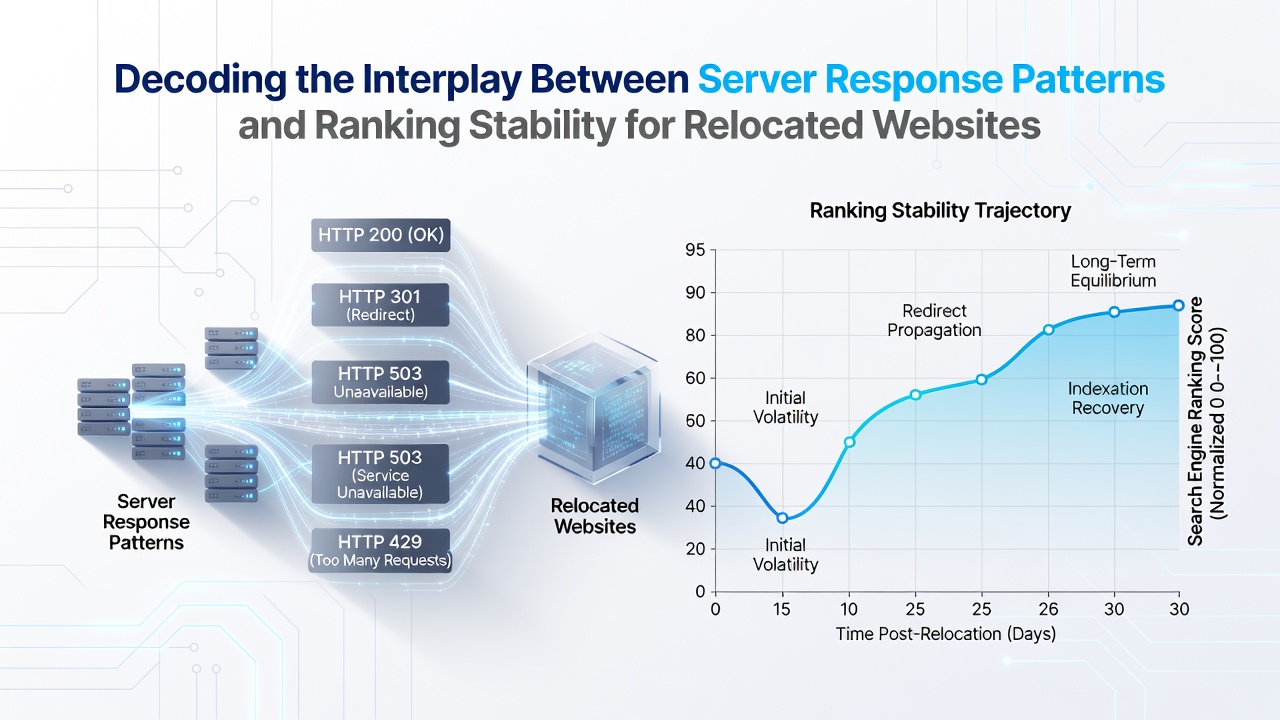
Studies of relocated websites indicate that ranking volatility tends to cluster around periods of inconsistent server behavior, particularly when response patterns shift from stable to erratic within the first 30 to 60 days post-migration. Those who monitor search performance data frequently identify correlations between elevated 5xx error rates and temporary drops in visibility for key landing pages, while sites that maintain uniform response distributions across their new infrastructure demonstrate quicker recovery trajectories. What's interesting here is how even minor variations in time-to-first-byte measurements can compound into broader indexing delays, especially if the new hosting environment processes requests differently than the previous setup.
Figures from performance monitoring platforms reveal that sites experiencing sustained response times above 500 milliseconds after relocation often see corresponding instability in mobile rankings, a trend that persists until backend optimizations stabilize the output. Observers tracking these metrics across various industries note that the relationship strengthens when large-scale content volumes move simultaneously, creating bottlenecks that search algorithms interpret as reduced site reliability.
Technical Factors Amplifying or Mitigating Effects
Redirect implementation quality, caching configurations, and CDN integration all modulate how server responses translate into ranking outcomes for moved domains. Experts examining post-migration logs have documented cases where improperly chained redirects generated excessive 301 signals that delayed full indexation of the new domain, whereas clean server-side redirects paired with proper canonical tags helped maintain continuity. And because search engines allocate crawl budgets based partly on historical response reliability, relocated sites that exhibit fluctuating uptime patterns risk slower re-evaluation of updated content structures.
According to documentation from the developers.google.com search resources, handling server errors promptly during domain transitions supports more predictable indexing behavior. Data from similar monitoring efforts in other regions, including reports compiled by the Australian Government’s Digital Transformation Agency, further shows that proactive error logging and rapid remediation reduce the duration of ranking fluctuations associated with relocation projects. Those who've studied large-scale migrations observe that sites incorporating real-time response monitoring tools tend to identify and resolve latency issues before they affect broader visibility metrics.
Longer-Term Stability Considerations
As infrastructure matures after the initial move, server response patterns typically normalize and ranking positions regain consistency, though residual effects can linger if legacy redirect rules remain unpruned or if new hosting providers introduce variable performance under load. Research tracking sites through the September 2026 period indicates that organizations maintaining detailed server log analysis alongside search console data achieve more reliable stabilization compared with those relying solely on periodic audits. The patterns become especially relevant for enterprise-scale sites where content updates coincide with ongoing infrastructure scaling.
Yet the connection between these technical signals and search performance remains dynamic because algorithm updates can reinterpret response data in new ways, prompting ongoing adjustments in how relocated websites configure their server environments. Analysts following these developments point to the value of maintaining consistent response profiles across both desktop and mobile delivery paths, since divergence in these areas often precedes secondary ranking shifts.
Conclusion
The relationship between server response patterns and ranking stability for relocated websites rests on measurable technical interactions that unfold across defined timeframes after domain transfers. Evidence gathered from performance datasets and indexing records demonstrates that sustained attention to status code distributions, latency consistency, and error resolution supports more predictable outcomes, while deviations in these areas frequently precede measurable fluctuations in search visibility. Observers continue to document how these dynamics evolve as hosting technologies and search engine evaluation methods advance in parallel.